
Reference
Garage door parts reference
What each component does and how it fails. The single most useful thing to know: the spring carries the door's weight, not the opener. Almost every confusing symptom makes sense once that is clear.
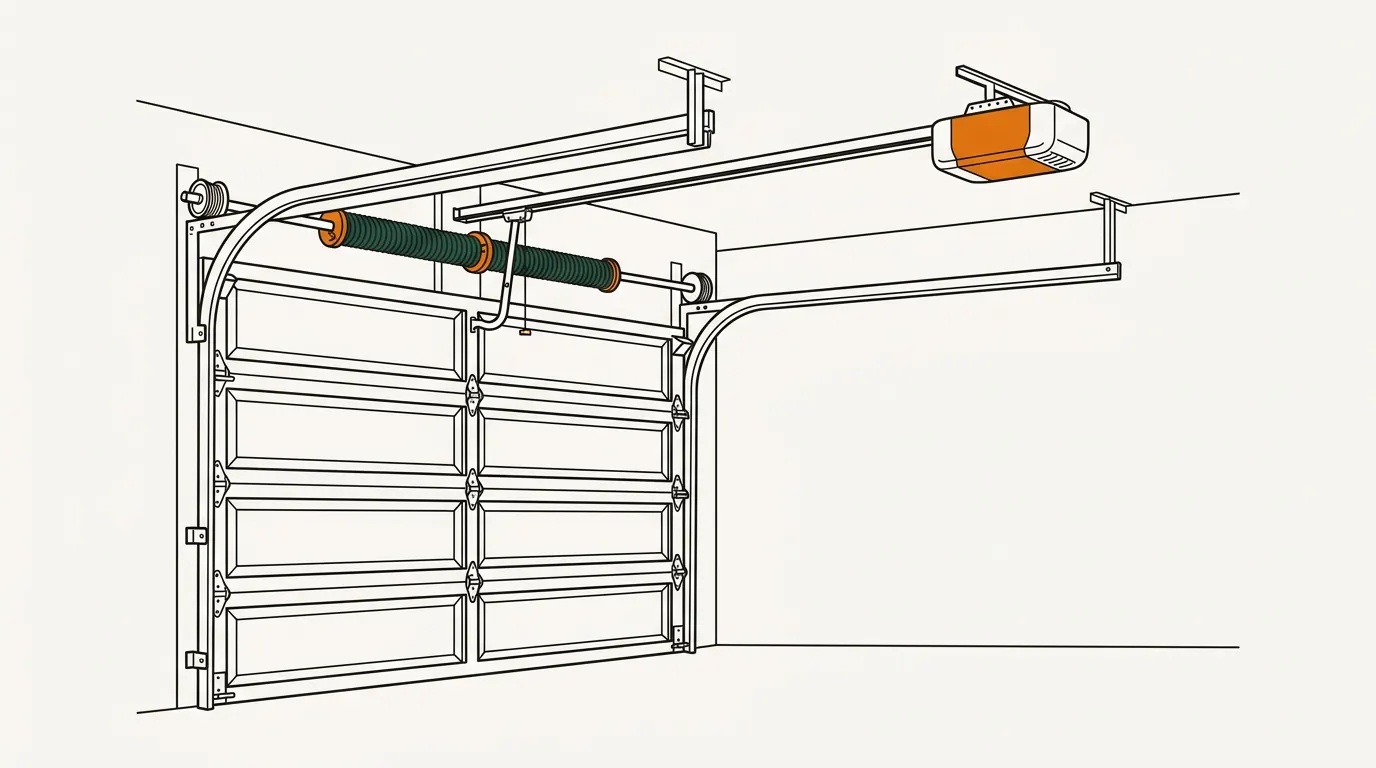
The complete system. Spring and shaft above the opening, cable drums at each end, track curving to the ceiling, opener on its rail.
Torsion spring
Mounted on a shaft above the opening. Carries the door's entire weight — the opener only guides it. Rated in cycles, typically 10,000.
Repair guide →Winding cone
The fitting at each spring end where tension is set with winding bars. The most dangerous component to touch.
Repair guide →Cable drum
Grooved drum at each end of the shaft. The lift cable winds into the grooves and carries load to the door's bottom bracket.
Repair guide →Lift cable
Steel cable from the drum to the bottom bracket. Frays at the bottom first, where floor moisture reaches it.
Repair guide →Rollers
Run the door through the track. Builder-grade steel lasts 5–7 years; nylon with sealed bearings lasts 10–15 and is far quieter.
Repair guide →Track
C-shaped steel channel, vertical then curving to horizontal. Bends easily on vehicle impact.
Repair guide →Photo-eye sensors
Paired beam about six inches off the floor. Federally required since 1993; reverses the door on obstruction.
Repair guide →Opener drive gear
Plastic gear inside the opener, deliberately the weakest link so the motor survives. Strips first.
Repair guide →Bottom seal
U-shaped rubber in a retainer channel on the bottom rail. Degrades fastest in heat, tears in freeze.
Repair guide →
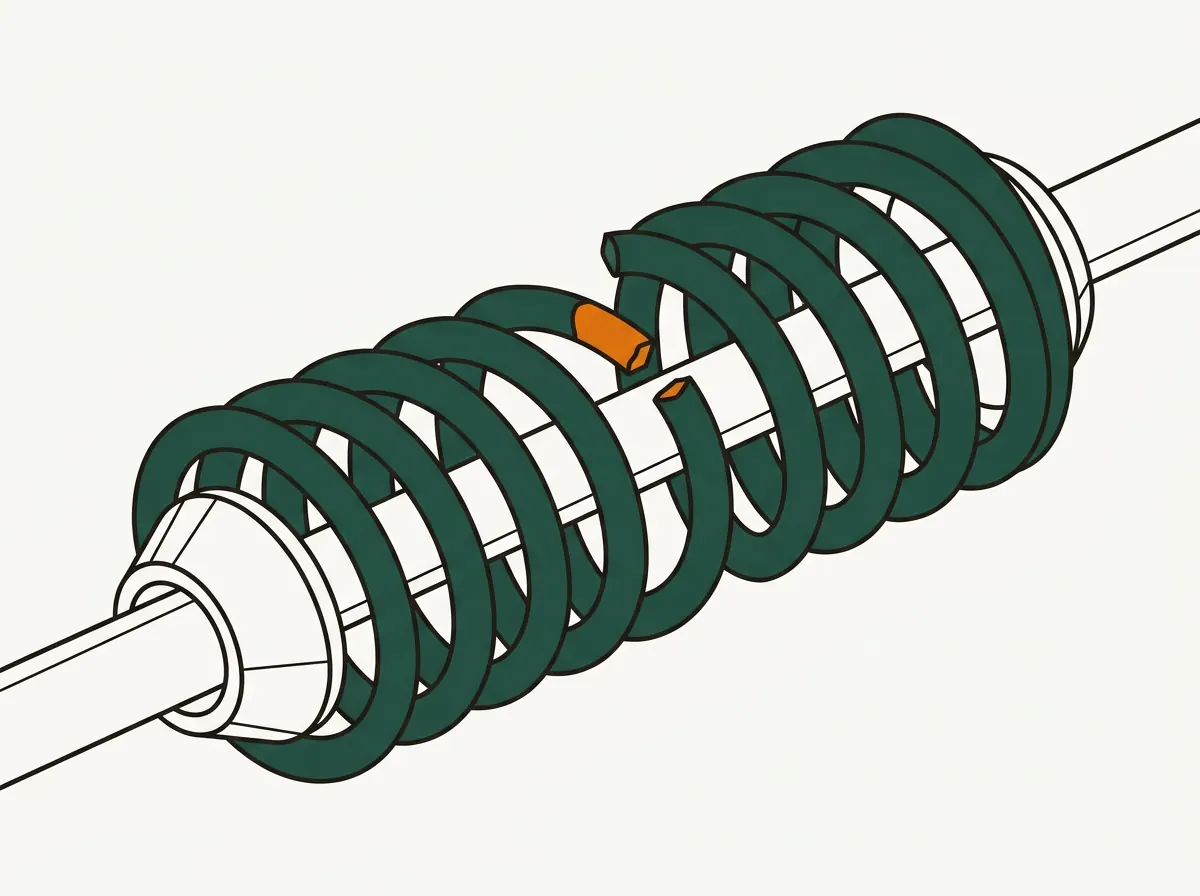
A broken torsion spring shows a clean two-to-three-inch gap. The winding cone at the end is where the tension is set — and where the danger is.
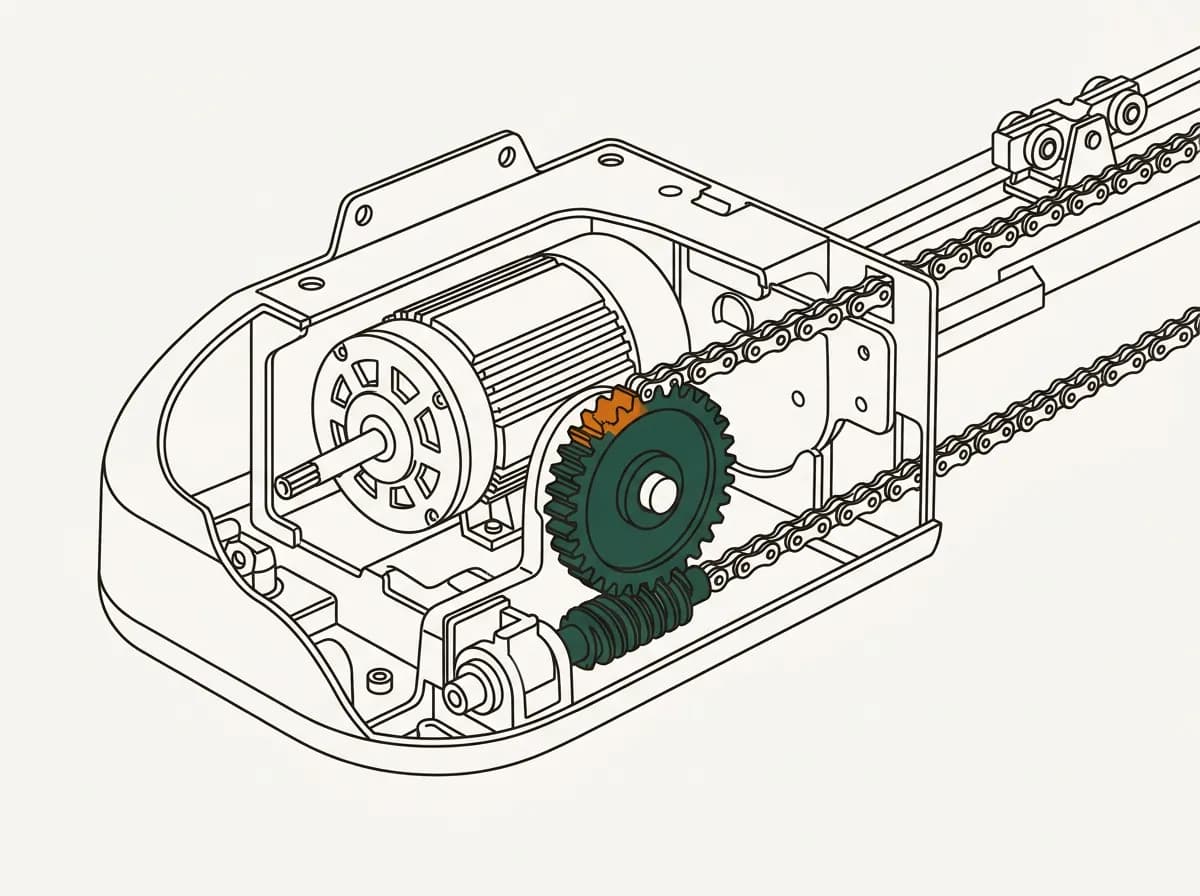
The plastic drive gear is the part that usually goes. It is deliberately the weakest link — it strips so the motor survives. That is why the opener runs at full speed with nothing moving.
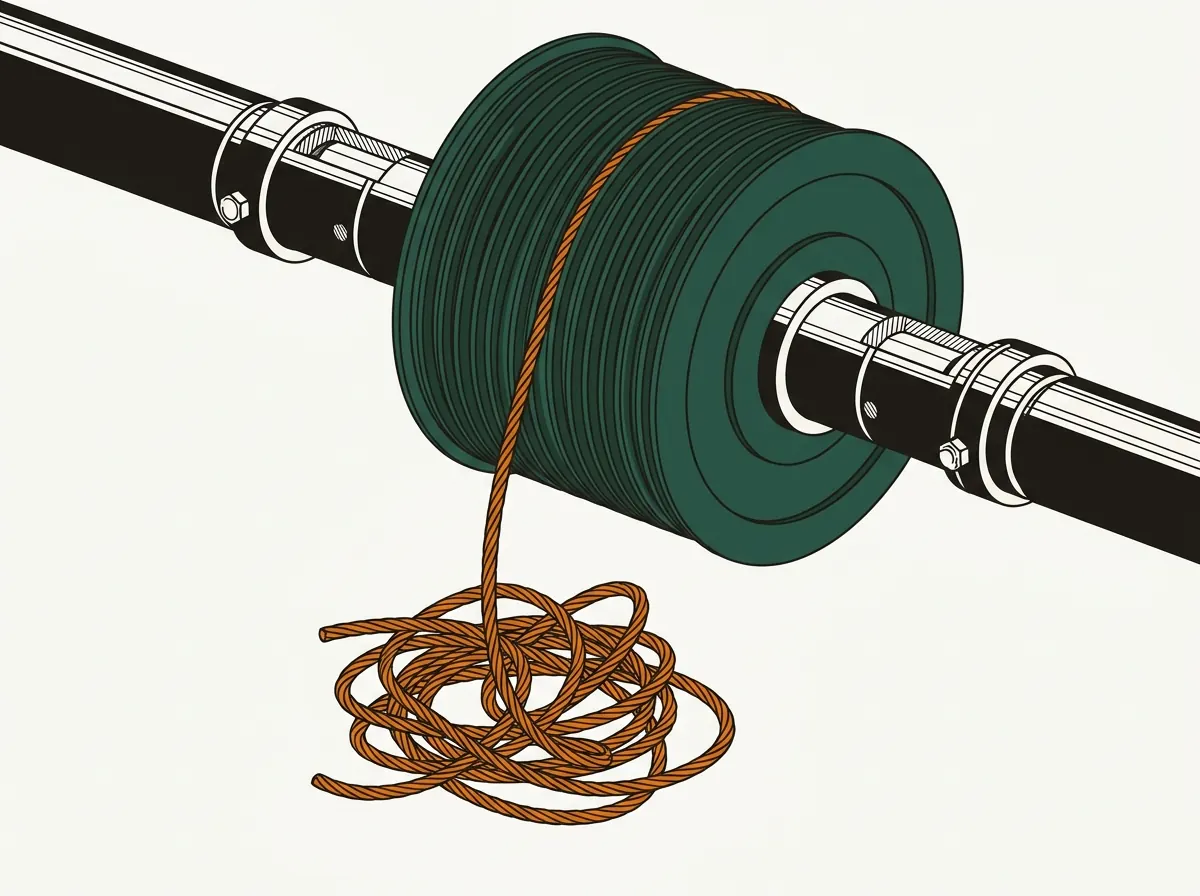
The cable should sit wound in the drum's grooves. Once it jumps out, that side of the door has nothing holding it up — which is why the door goes crooked and why you should stop using it.
Get a tech dispatched
Tell us what the door is doing and where you are. We'll connect you with a licensed contractor in your area — usually within the hour.
We pass your details to one licensed contractor serving your ZIP. We don't sell your information to multiple companies. Privacy