
Parts reference
Rollers, hinges and track — sizes, numbers and why they matter
Rollers, hinges and track are sized as a system: residential doors almost universally run 2-inch track with matching rollers, and the hinges are numbered — the number is stamped into the steel — because each position up the door needs a progressively offset roller carrier. Reassembling hinges in the wrong order is why a door that was 'just serviced' suddenly rubs the jamb or gaps at the top.
Before ordering: measure and photograph
- 1.Track width, measured across the inside of the channel — 2 in residential, 3 in on commercial doors
- 2.Roller diameter and stem length — a standard 2-in roller is about 1⅞ in across, on a 4-in or 7-in stem
- 3.The stamped number on each end hinge, photographed in place before anything is removed
- 4.Bearing style on the rollers: sealed nylon, open steel, and the ball count if listed
- 5.Track radius if replacing curved sections — 12-in and 15-in are the common residential radii
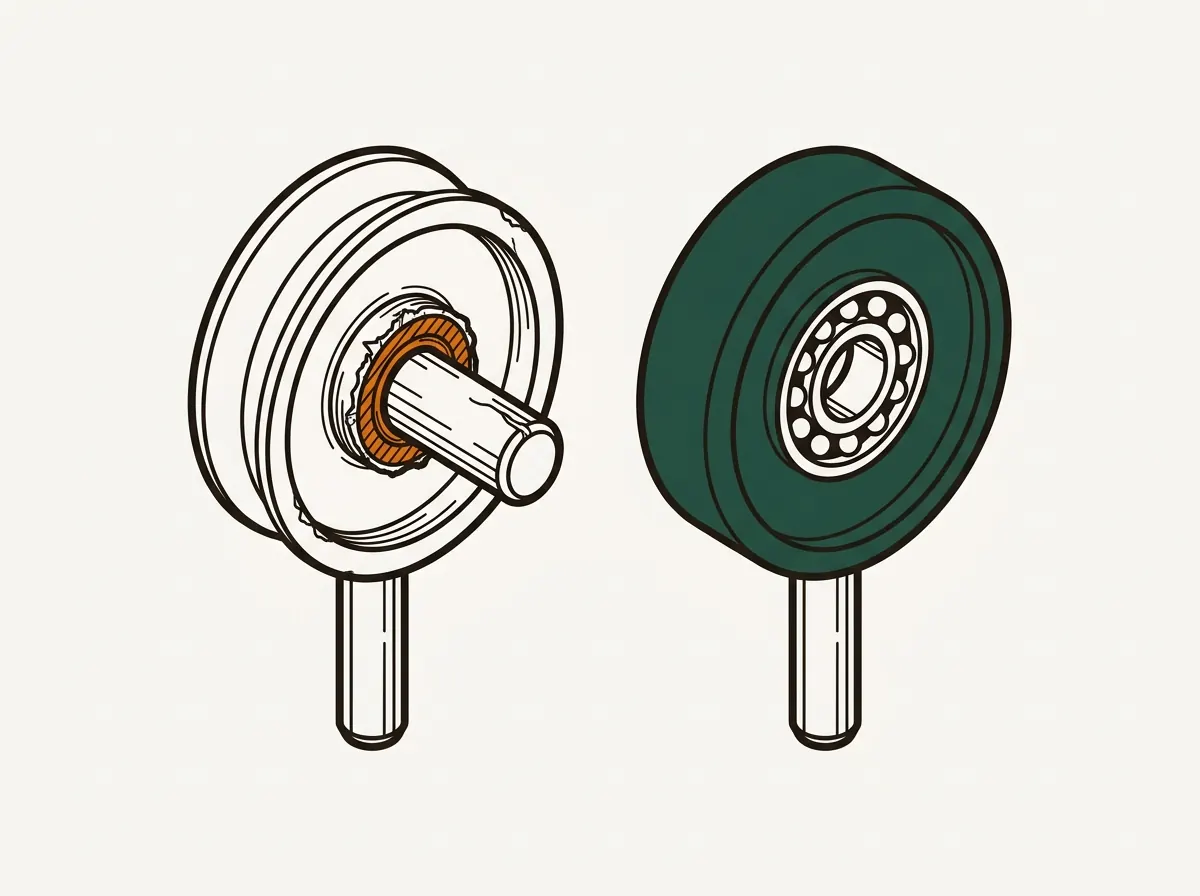
Steel against sealed nylon. The tire is what you see; the bearing is what fails — sealed matters more than the advertised ball count.
Where identification ends
The rollers in the middle and upper hinges can be worked on one hinge at a time with the door down. The two bottom rollers live in the bottom brackets, which are under full cable tension — those two are professional territory, always.
Why hinges carry numbers
Look at any end hinge — the hinges along the sides of the door — and there is a number stamped in the steel: 1, 2, 3, sometimes 4 or 5. The number rises as you go up the door, and it is not a part-quality grade. It sets how far the roller carrier stands off from the door face.
The offset increases with height because the vertical track leans slightly back and the door has to press progressively tighter toward the jamb as it rises, then release cleanly into the curve. Centre-column hinges, which carry no roller, are all the same and are usually stamped 1.
Put a 3 where a 2 belongs and the door binds against the stop moulding at that height; swap the other way and it gaps. This is the diagnosis for a door that started rubbing immediately after being taken apart for painting or panel work — the hinges went back shuffled, and the fix is to read the stamps and restore the sequence.
Rollers: what the sizes mean
A '2-inch roller' runs in 2-inch track and actually measures about 1⅞ inches across the tire — the quarter inch is running clearance. Commercial 3-inch track takes a correspondingly larger roller; the two do not interchange.
Stem length is the second dimension: 4-inch stems are standard through most hinge positions, 7-inch stems appear in top brackets and some end-hinge positions where the carrier sits further from the track. Count and photograph what came out.
Quality lives in the bearing, not the tire. A sealed-bearing nylon roller outlasts and outquiets an open 10-ball steel roller, and 'sealed' matters more than the advertised ball count — an open bearing in a garage eats grit from day one.
Track: width, radius and what bends
Track width is read across the open channel: 2 inches on nearly all residential doors, 3 inches on commercial. The width must match the rollers, so it is the first thing to confirm before ordering either.
The curved sections joining vertical to horizontal track come in standard radii — 12 and 15 inches are the common residential ones — and headroom determines which fits. Replacement curves must match the radius, not just the width.
Vertical track bends at car-bumper height and shows it plainly. Horizontal track fails differently: at the hangers, where a swaying door works the lag screws loose in the ceiling. A door that shudders at the transition usually needs its hangers re-secured, not new track.
Common questions
Why are garage door hinges numbered?
The stamped number sets the roller-carrier offset for that height of the door — higher numbers stand the roller further off so the door presses correctly toward the jamb as it rises. Hinges reinstalled in the wrong sequence make the door rub or gap, which is why the stamps are photographed before disassembly.
What size rollers does my garage door take?
Match the track: 2-inch track — nearly all residential doors — takes rollers measuring about 1⅞ in across, on 4-in stems in most positions and 7-in in some top and end positions. Choose sealed-bearing nylon over open steel; the sealing matters more than the ball count.
Can I replace a bent section of track?
Vertical sections, yes — matched for width. Curved sections must also match the radius, commonly 12 or 15 inches on residential doors. If the door came off its rollers when the track bent, have the cause corrected at the same time or the new track bends the same way.
Get a tech dispatched
Tell us what the door is doing and where you are. We'll connect you with a licensed contractor in your area — usually within the hour.
We pass your details to one licensed contractor serving your ZIP. We don't sell your information to multiple companies. Privacy