
High-cycle spring conversion for commercial doors
A high-cycle spring conversion costs $480 to $1,200 and replaces a door's standard 10,000-cycle springs with springs rated for 25,000 to 100,000 cycles. On a door cycling 40 times a day, that is the difference between a spring failure roughly every eight months and one every four to seven years — which is why on busy doors the conversion is arithmetic, not an upsell.
- Typical cost
- $480–1,200
- Typical duty
- 20+ cycles/day is where it pays
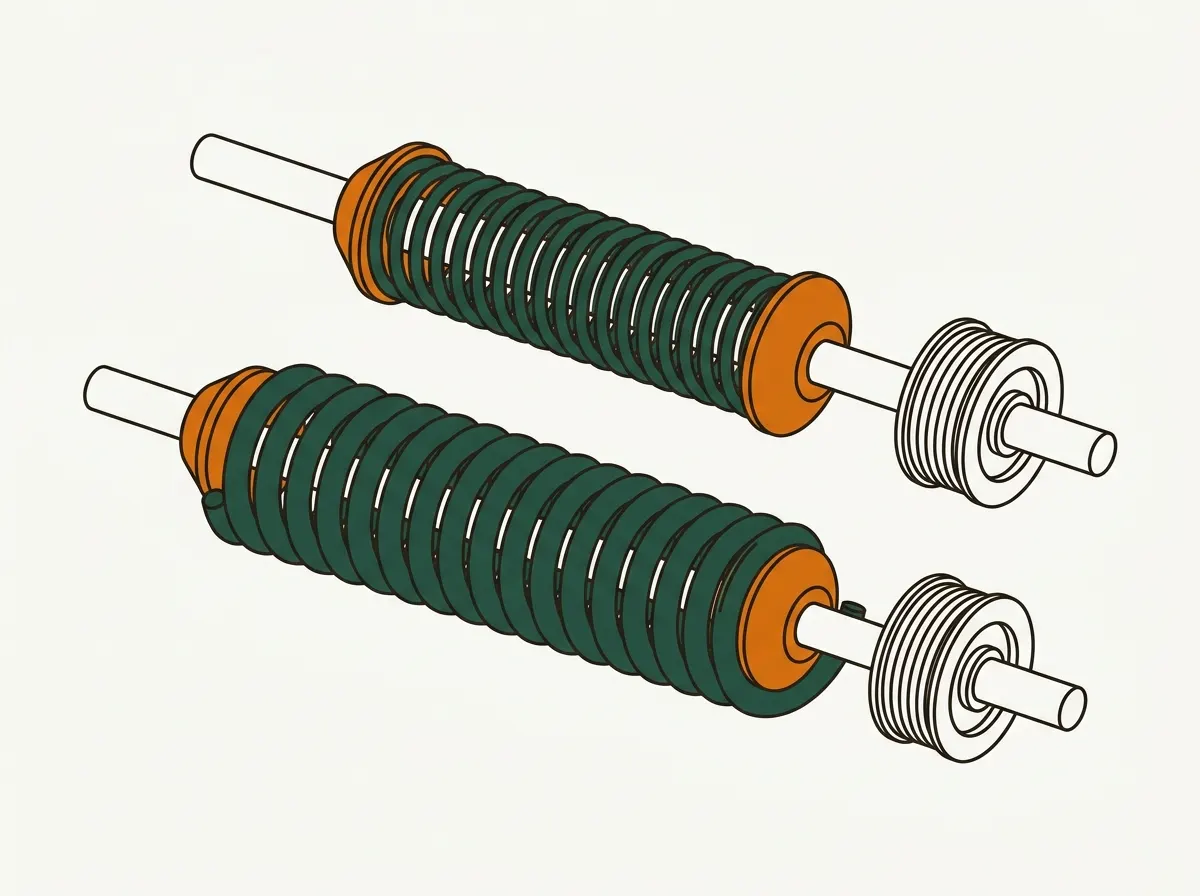
Same torque, different fatigue life. The high-cycle spring is longer and wound from heavier wire, so each cycle consumes less of the steel — which is also why it needs shaft length to live on.
The arithmetic, stated plainly
Cycle life divided by daily cycles is the service interval. A 10,000-cycle spring at 40 cycles a day fails in about 250 working days. The same door on 50,000-cycle springs runs roughly five years between spring changes.
Each unplanned spring failure on a commercial door costs the repair, the emergency response premium, and however long the bay behind it stands idle. The conversion premium is one number against that recurring total, which is why the payback on any door above about 20 cycles a day is usually inside the first avoided failure.
Below about 10 cycles a day the arithmetic reverses — a standard spring already lasts years at that duty, and the conversion money does more good spent on preventive maintenance.
What physically changes
A higher cycle rating is not a different steel. It is a longer spring with heavier wire delivering the same torque at lower internal stress, so each cycle consumes less of the metal's fatigue life.
That geometry has consequences: the longer springs need shaft length to live on, and a door at the top of the ratings — 100,000 cycles — sometimes moves from two springs to three or four. Part of a conversion quote is confirming the shaft and centre bearing arrangement can take the new springs at all.
The rest of the load path matters too. High-cycle springs driving worn drums, stretched cables and dry bearings just relocates the next failure, so a proper conversion is quoted with the cables and bearings inspected and usually replaced in the same visit.
Specifying it without being oversold
Count real cycles for a week — modern operators hold a cycle count, and a tally counter on the wall works where they do not. Buy the rating the count justifies, not the biggest number on the sheet.
25,000-cycle springs suit doors in the 10-to-20-cycle band; 50,000 suits the 25-to-50 band; 100,000 is for doors that effectively never stop. Matching the band keeps the conversion at the low end of the cost range.
Ask for the spring specification — wire size, inside diameter, length — on the invoice. It documents what was fitted, and it makes the next replacement a like-for-like order instead of a re-diagnosis.
Common questions
How much does a high-cycle spring conversion cost?
High-cycle spring conversion costs $480 to $1,200 depending on the rating and how many springs the door needs. 25,000-cycle springs sit at the low end; 100,000-cycle setups, which sometimes require three or four springs, at the top.
How long do high-cycle springs last?
Divide the rating by daily cycles: 50,000-cycle springs on a door running 40 cycles a day last roughly five years, against about eight months for standard 10,000-cycle springs on the same door.
Is a high-cycle conversion worth it on a residential door?
Only on heavily used doors. A household running 8 or more cycles a day exhausts a standard spring in about three and a half years, and the residential version of the upgrade — 25,000-cycle springs for $80 to $150 extra — pays for itself. At two cycles a day it does not.
Get a tech dispatched
Tell us what the door is doing and where you are. We'll connect you with a licensed contractor in your area — usually within the hour.
We pass your details to one licensed contractor serving your ZIP. We don't sell your information to multiple companies. Privacy