
Garage door squealing or squeaking when it moves
This is almost always a dry rollers, hinges and bearings. Repair costs $100 to $250 and takes 45 to 60 minutes. Safe to operate: Yes.
Check this first — it may cost you nothing
Lubricate the hinges, roller stems and the torsion shaft bearings with a garage-door lubricant. Never WD-40 — it is a solvent, it strips what is there and then collects grit.
Why this happens
Squealing is friction, not damage. The rollers, hinges and shaft bearings need lubrication, and without it the noise is the first sign of wear that eventually costs parts rather than a can of lubricant.
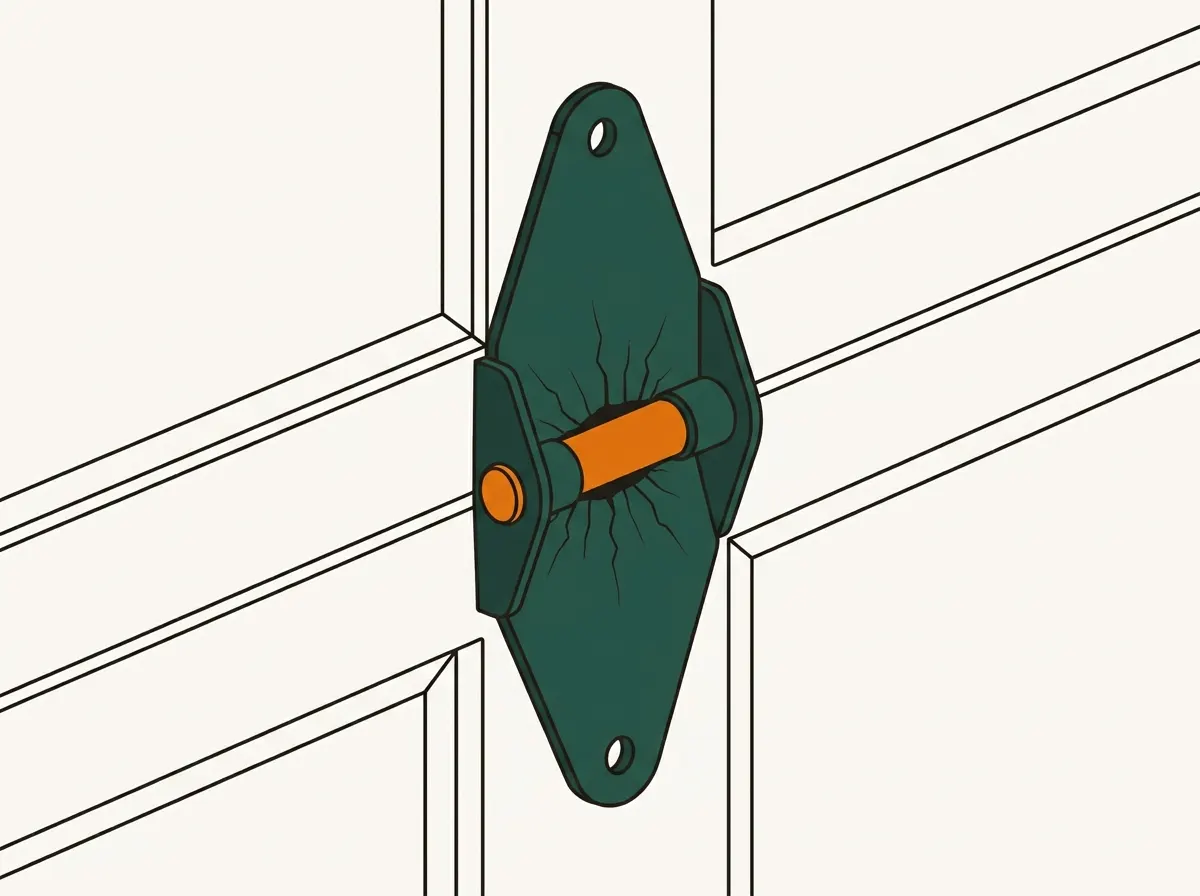
The squeal is metal on dry metal — hinge pins and roller stems that have run out of lubricant. Garage-door lube twice a year silences it.
Less likely, but possible
- Nylon rollers worn through to the stem
- A dry opener rail, which squeals distinctly from the door itself
- Hinges rusting in a coastal or humid garage
What happens if I ignore it?
Friction becomes wear. Dry bearings seize, and a seized roller drags in the track until it bends the track or leaves it. The cheap fix has a short window.
The repair: tune-up
A garage door tune-up costs $100 to $250 and includes balance adjustment, hardware tightening, lubrication, safety-reversal testing and sensor alignment. It is genuinely worth it on a door over five years old, and largely unnecessary on a newer one.
Read the full tune-up guide →Get a tech dispatched
Tell us what the door is doing and where you are. We'll connect you with a licensed contractor in your area — usually within the hour.
We pass your details to one licensed contractor serving your ZIP. We don't sell your information to multiple companies. Privacy